
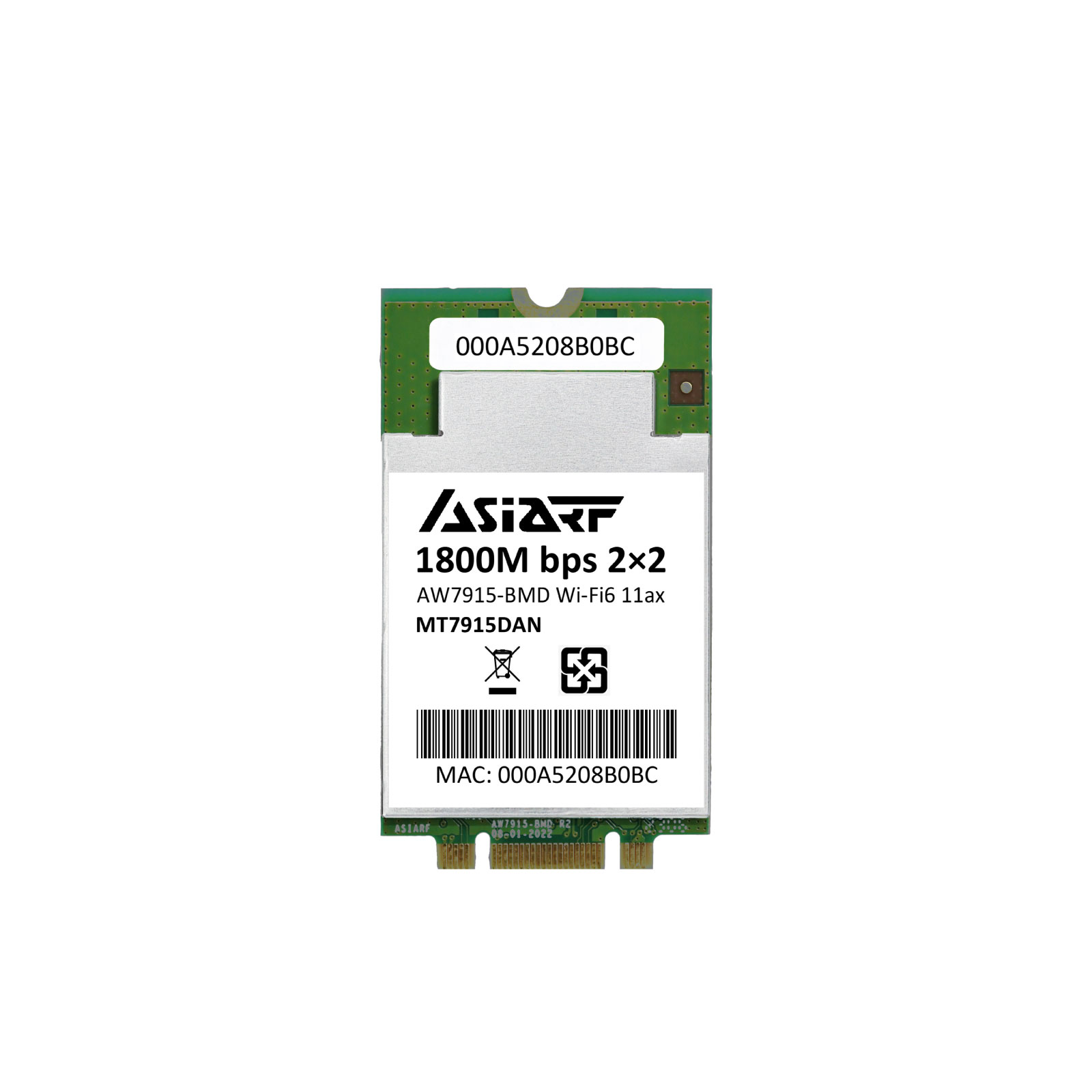


Wi-Fi 6 11ax M.2 BM Key Module AW7915-BMD

Original price was: £20.92.£10.46Current price is: £10.46.
AW7915-BMD is a Wi-Fi 6 M.2 Module BM Key by MT7915DAN, offering reliable wireless connectivity with a PHY rate of 1800Mbps. It complies with IEEE 802.11ax/ac and IEEE 802.11 ac/a/b/g/n standards.
Power consumption maximum is 9W, average is 4 – 8W.
Main board Power Supply design please provide 3.3V 3A, minimum 3.3V 2.5A.
AW7915-BMD: Reliable Wi-Fi 6 M.2 BM Key Module with 1800Mbps PHY Rate – 2T2R Dual Bands Dual Concurrents DBDC IEEE802.11ax by Mediatek MT7915DAN
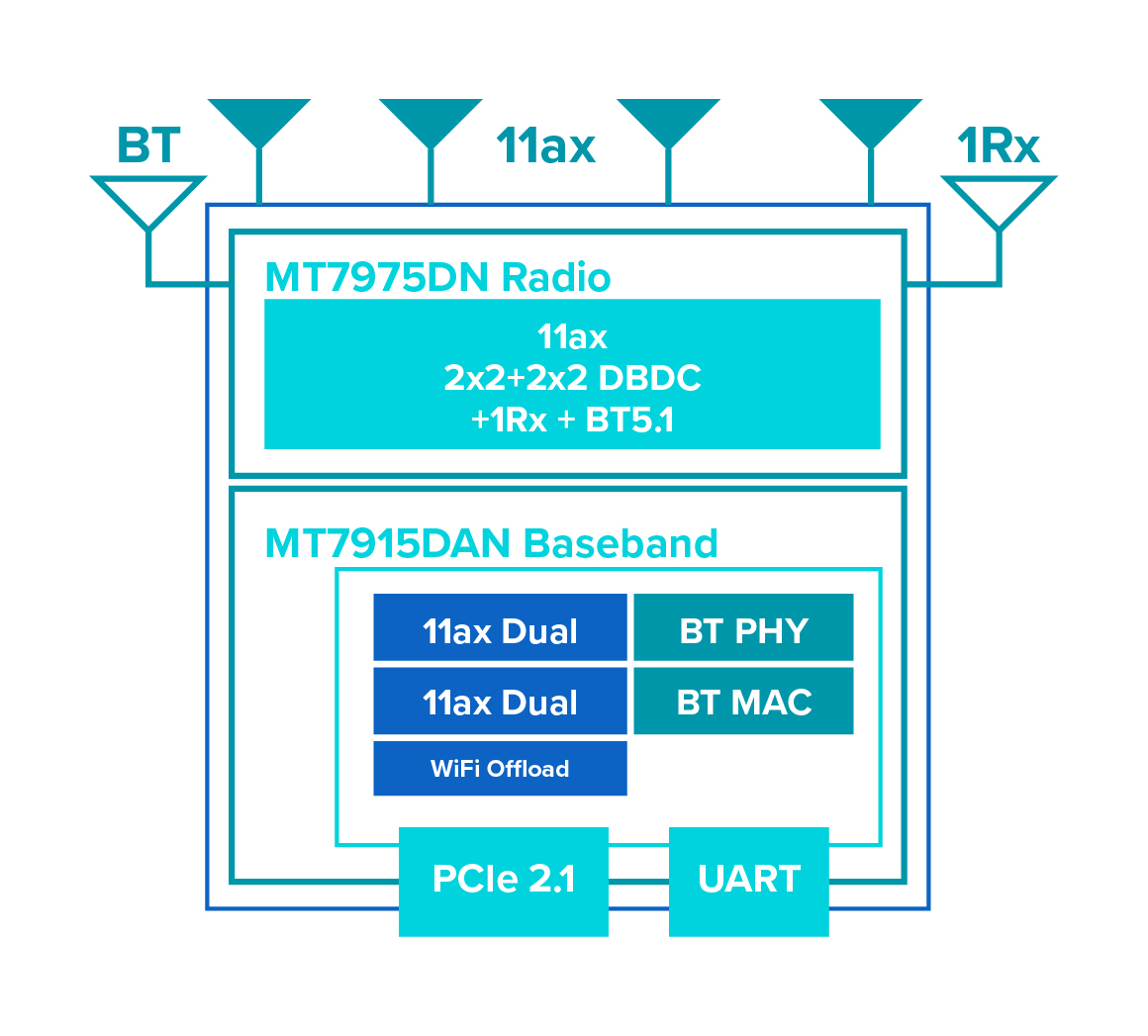
Introducing the AW7915-BMD, a Wi-Fi 6 M.2 Module with BM Key, powered by the MT7915DAN chipset. It’s your ticket to rock-solid wireless connectivity with a speedy PHY rate of 1800Mbps. And guess what? It plays nicely with a bunch of IEEE standards, including 802.11ax/ac and even the older 802.11 ac/a/b/g/n ones. Now, let’s talk tech. This module is no slouch. It’s got some clever tricks up its sleeve. Thanks to its optimized RF architecture and smart MAC design, it performs like a champ while sipping power conservatively. Plus, it’s all about dual bands and dual concurrent operation, which means it can juggle two wireless tasks at once. When it’s time for a power nap, it’s got you covered too. It has multiple power domains and can go into a deep sleep mode to save those precious watts. Inside, you’ll find a 32-bit RISC MCU subsystem, clock control options, and PDMA engines to keep your data flowing efficiently. But here’s where it really shines. The MT7915DAN chipset inside combines the Wi-Fi MAC and BBP subsystems to deliver top-notch radio performance. It’s all about giving you the best possible connection. It even supports multi-user MIMO (MU-MIMO) for when you’ve got a crowd of devices. And don’t worry about your data’s speed – it’s got an integrated PCIe interface for a stable, high-speed link between your device and the module. In a nutshell, the AW7915-BMD is a high-performance Wi-Fi 6 module that’s all about advanced features, efficient power use, and keeping you connected to multiple devices.
Key capabilities and benefits
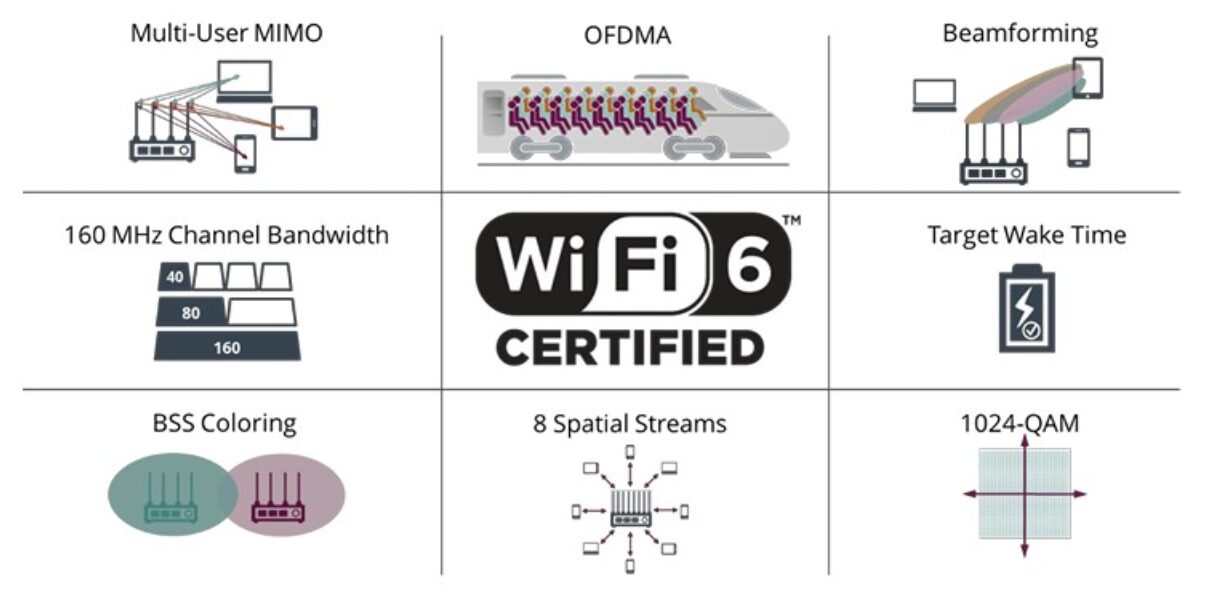
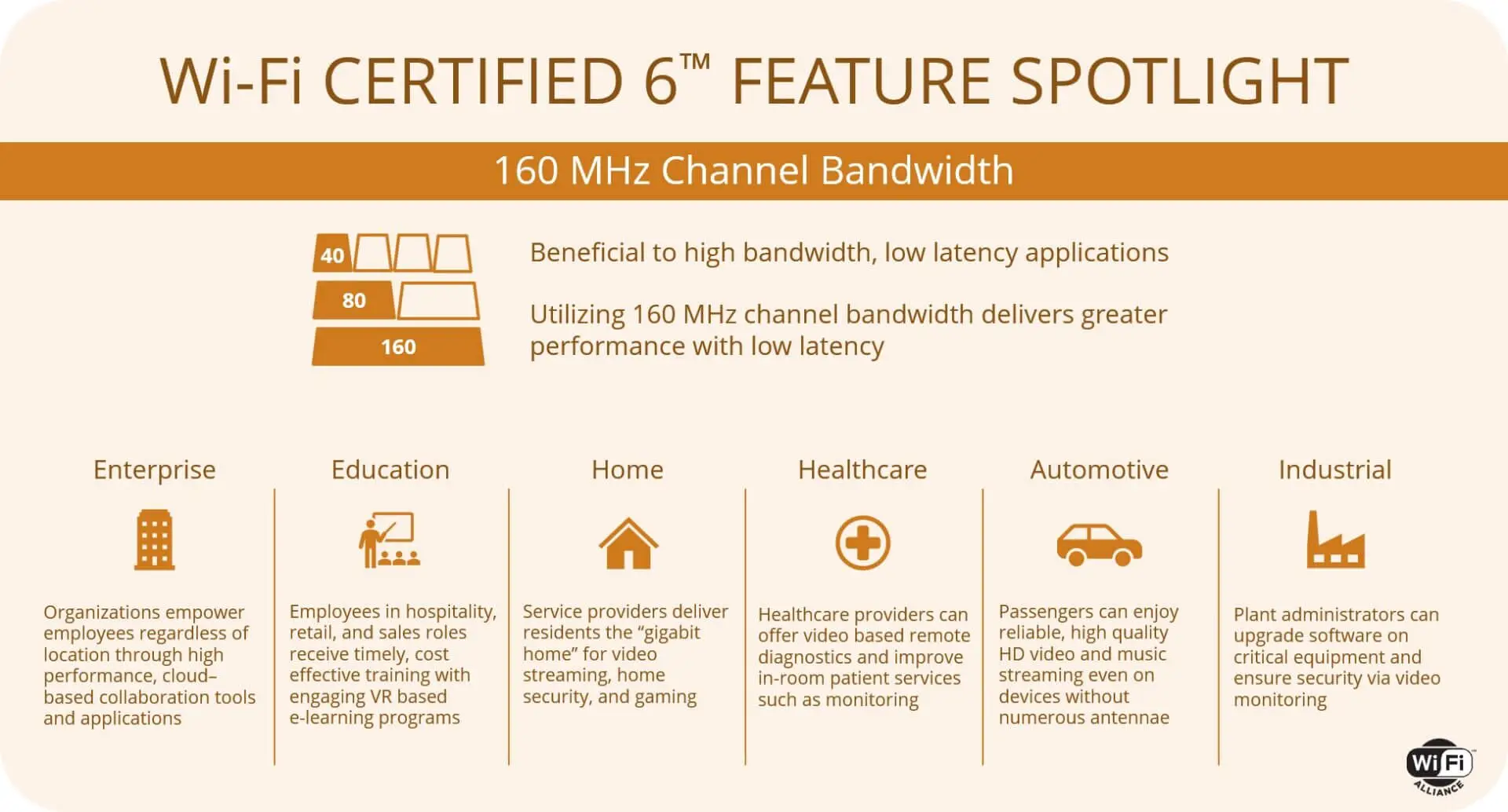
- The operation of Wi-Fi 6E in the 6 GHz spectrum offers extremely wide 160 MHz channels and additional capacity, leading to enhanced network performance.
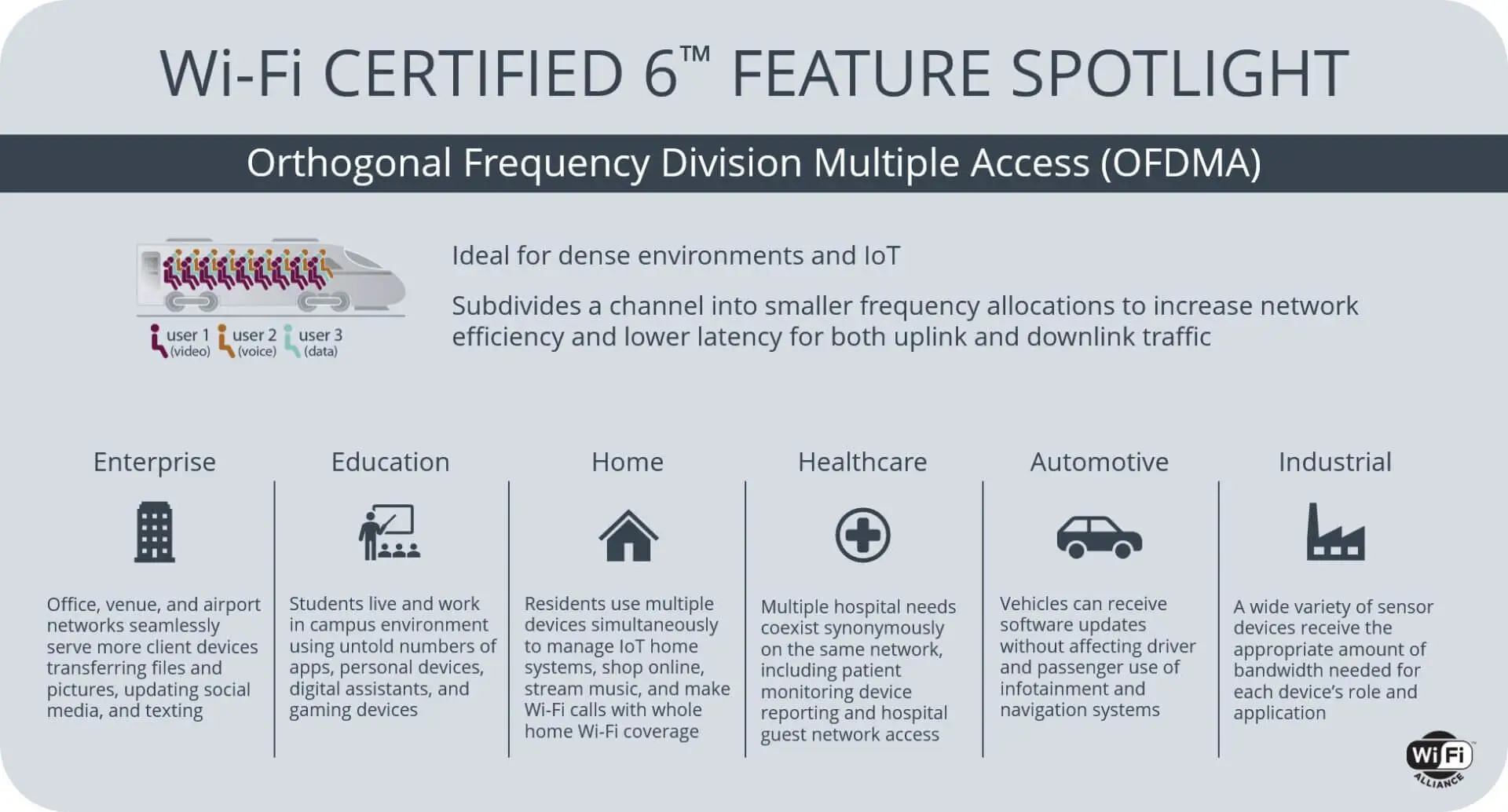
- Orthogonal frequency division multiple access (OFDMA) more efficiently allocates channels, thereby increasing network efficiency and reducing latency for both uplink and downlink traffic in high-demand environments.
- Multi-user multiple input, multiple output (MU-MIMO) allows more uplink and downlink data to be transferred at once and enables an access point to handle a larger number of concurrent clients.
- The ability to utilize a 160 MHz channel increases bandwidth, resulting in enhanced performance with minimal latency.
- 1024 quadrature amplitude modulation mode (1024-QAM) enables throughput increases by encoding more data in the same amount of spectrum.
- Transmit beamforming enhances signal power, leading to significantly higher data rates within a specified range.

Wi-Fi generation comparison overview
| Feature | Wi-Fi 4 | Wi-Fi 5 | Wi-Fi 6 |
| Channel bandwidth (MHz) | 20, 40 | 20, 40, 80, 80 + 80, 160 | 20, 40, 80, 80 + 80, 160 |
| Frequency bands | 2.4 and 5 GHz | 5 GHz | 2.4,5, and 6 GHz |
| Maximum data rate | 150 Mbps | 3.5 Gbps* | 9.6 Gbps* |
| Highest subcarrier modulation | 64-QAM | 256-QAM | 1024-QAM |
| Spatial streams | 1 | 4 | 8 |
| Underlying technology | IEEE 802.11n | IEEE 802.11ac | IEEE 802.11ax |
* Depending upon number of spatial streams and channel used
Specification Comparison Chart : Best-Selling Wi-Fi Module
Learn more on our blog: How to choose good performance Wi-Fi module for Robot?
Or follow us on Linkedin : Why use Wi-Fi 6E? What are the benefits of Wi-Fi 6E products?
Be the first to review “Wi-Fi 6 11ax M.2 BM Key Module AW7915-BMD”
Related products
Hot Sale

Hot Sale


Hot Sale

Reviews
There are no reviews yet.